From the Counter to the Leftovers
Think of a piece of cheese as having four stops after you buy it. Each one has a small habit that makes a noticeable difference.
Getting it home
Cheese is perishable, so make it one of the last things you buy and get it into the fridge quickly. On a hot day, a cool bag helps soft and fresh cheeses in particular.
In the fridge
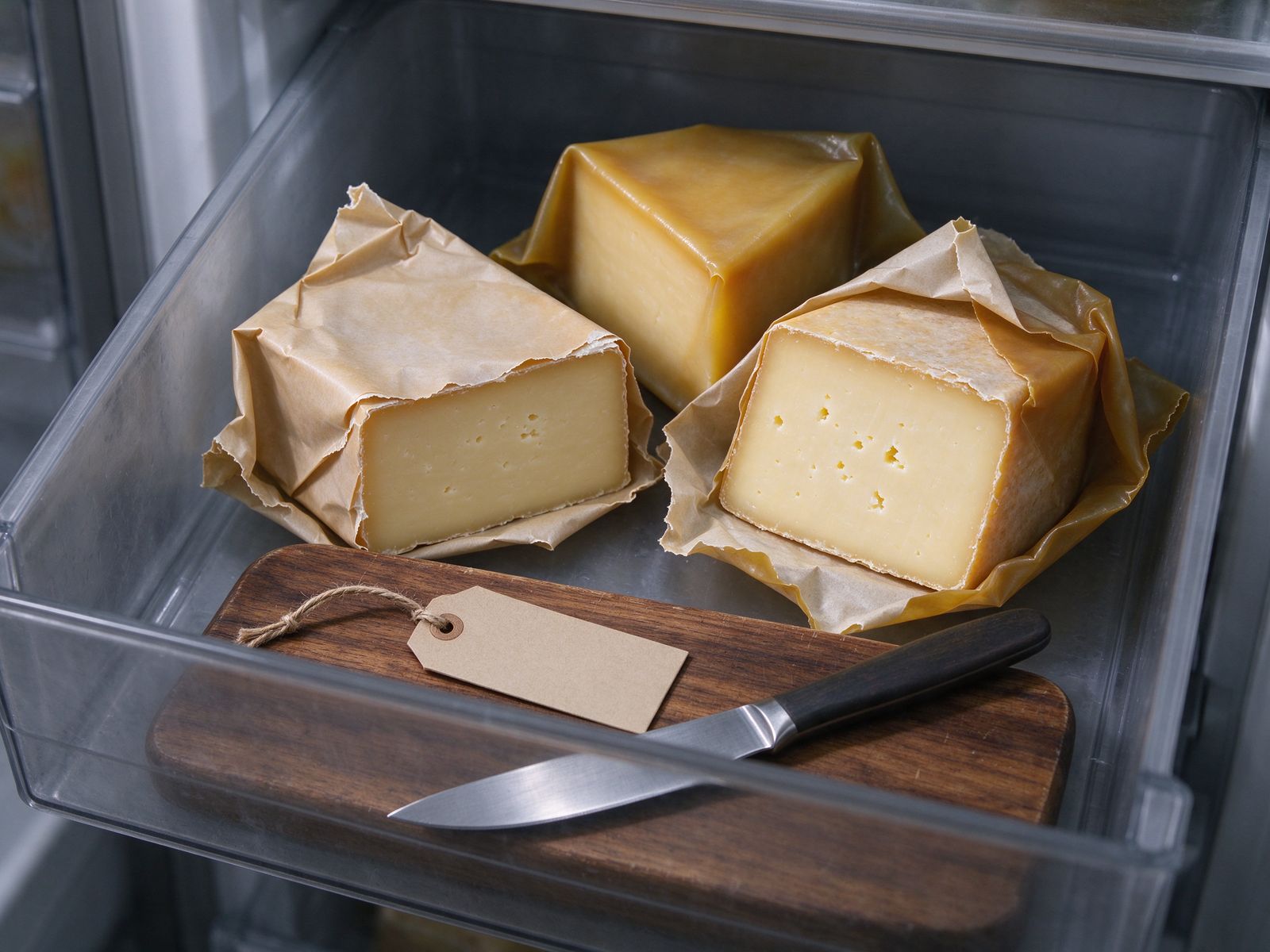
Rewrap in paper, label it with the name and date, and store it in the vegetable drawer or a lower shelf, away from strong-smelling foods.
On the table
Temper it, still wrapped, before serving. Cut only what you need. Serve within safe time limits and refresh rather than leave out.
Leftovers
Scrape the cut face if it has dried or sweated, rewrap in fresh paper and eat soft cheeses within days. Hard rinds can go into soups and stocks.
Wrapping Cheese the Right Way
The goal is a balance: stop the cheese drying out, but do not suffocate it. Cheese gives off moisture and gases as it ages, and a tight plastic seal traps them against the surface. Over a few days that can make the cut face slick and give it a plasticky taste.
- Cheese paper is made for the job: a waxy inner layer that holds moisture and a porous outer layer that breathes.
- Waxed or parchment paper plus a loose bag is the home version and works well.
- Beeswax wraps are reusable and work for firm cheeses; wash them gently between uses.
- Lidded containers are right for fresh cheeses in liquid and for pungent washed rinds, whose aroma travels.
Wrap blues on their own so their mould does not wander. Use fresh paper each time you rewrap, and write the name and date on it. It sounds fussy until you find an unlabelled wedge at the back of the fridge three weeks later.
Fridge and Freezer
Your fridge should sit at 40°F (4°C) or below, the level food safety agencies recommend for perishable food. Inside that, the vegetable drawer or a lower shelf tends to be the best spot for cheese: steadier temperature and slightly more humid air than the door, which warms every time it opens.
How long a cheese keeps depends mostly on moisture. Fresh cheeses last days once opened. Soft-ripened and washed-rind cheeses last around a week once cut. Semi-hard cheeses go a couple of weeks, and hard cheeses several weeks when well wrapped. Trust your senses and the label's date over any chart.
Freezing
Freezing is a texture trade. Ice crystals break up the paste, so thawed cheese is often crumbly. That matters little for a hard cheese you plan to grate into a sauce, and a lot for a Brie you hoped to serve on a board. Freeze firm cheeses in portions you will use in one go, and thaw them slowly in the fridge.
When Unexpected Mould Appears
First, separate the mould that belongs from the mould that does not. The white coat on a Brie-style cheese and the veins in a blue are cultures added on purpose. Fuzzy spots of a different colour on a cheese that should not have them are a different matter.
Food safety
USDA guidance has long drawn the line by moisture. On hard and semi-hard cheeses, cut away at least one inch around and below the spot, keeping the knife out of the mould. Soft and fresh cheeses, and anything shredded, crumbled or sliced, should be thrown away if unexpected mould appears. Check current USDA guidance for the latest advice, and when in doubt, throw it out.
Tempering Helper: How Long Out of the Fridge?
Cold mutes flavour and stiffens texture. Pick a style to see a typical tempering time. Keep the cheese wrapped while it warms, and count this time toward the overall time food sits out.
15 to 30 minutes
Just enough to take the chill off. Fresh cheese is the most perishable, so keep it out for the shortest time and return leftovers to the fridge quickly.
About 45 to 60 minutes
Bloomy cheeses need time for the paste to soften and the flavour to open. A cold Brie-style round tastes of very little.
About 45 to 60 minutes
Like bloomy cheeses, these get creamier as they warm. Keep them covered while they temper so the aroma stays contained.
About 30 to 60 minutes
Warming brings out buttery, nutty notes. Slice while still cool for clean cuts, then let the slices sit.
About 30 to 60 minutes
Hard cheese is the most forgiving. Shave or break it while cold, then let it come up toward room temperature.
About 30 to 45 minutes
A little warmth softens the bite and lets the creaminess come through. Keep it apart from other cheeses on the board.
Typical ranges for a room around 68 to 72°F. Warmer rooms need less time. Follow current food safety guidance on how long perishable food should sit out.
Cutting Cheese by Shape
The aim of every cut is fairness: each piece should have a bit of rind and a bit of centre, because flavour changes from the outside in.
| Shape | How to cut | Typical styles |
|---|---|---|
| Small round | Like a cake: wedges from the centre out | Brie and Camembert styles, small goat rounds |
| Triangle wedge | Long slices from the point toward the rind | Blue, Brie wedges, semi-hard wedges |
| Tall wedge or block | Cut in half lengthwise, then slice across | Cheddar, Alpine and Gouda styles |
| Square | Cross-cut into smaller squares, then triangles | Taleggio-style washed rinds |
| Log | Coins, using a thin or wire cutter | Fresh goat logs |
| Very hard chunk | Break into shards with a short, sturdy blade | Parmigiano and other grana styles |
A separate knife per cheese stops flavours from mixing. Serve from mild to strong so a blue does not flatten everything that follows. For ideas on what goes around the cheese, see how to build a cheese board, and for drinks, the pairing guide.
Common Questions
Should cheese be wrapped in plastic wrap?
Cling film is fine for a day or two, but over longer periods it traps moisture against the cut face and can leave a plasticky taste. Cheese paper, or waxed or parchment paper with a loose bag over it, lets the cheese breathe while stopping it from drying out. Rewrap in fresh paper after each cut.
Can you freeze cheese?
You can, but freezing changes texture. Hard and semi-hard cheeses that will be grated or melted freeze reasonably well. Soft, fresh and bloomy cheeses usually turn crumbly or watery, so they are better eaten fresh. Thaw slowly in the fridge.
What should I do if my cheese has mould on it?
It depends on the cheese. USDA guidance has long said that hard and semi-hard cheeses can be saved by cutting away at least an inch around and below the spot, while soft, fresh, shredded and sliced cheeses with unexpected mould should be thrown away. Check current USDA guidance, and when in doubt, throw it out.
How long can a cheese board sit out?
Food safety agencies generally advise not leaving perishable food at room temperature for more than two hours, or one hour when it is above 90°F. Soft and fresh cheeses are the most perishable. For a long party, put out smaller amounts and refresh from the fridge.
Where in the fridge should cheese go?
A vegetable drawer or a lower shelf is usually best: the temperature is steadier and the air a little more humid than near the door. Keep your fridge at 40°F or below, the level food safety agencies recommend.