What Makes a Cheese Board Work
Most disappointing boards fail the same way: four cheeses that are all firm, yellow and mild, surrounded by a pile of crackers. Nothing is wrong with any single piece. The problem is that nothing contrasts, so after two bites everything tastes the same.
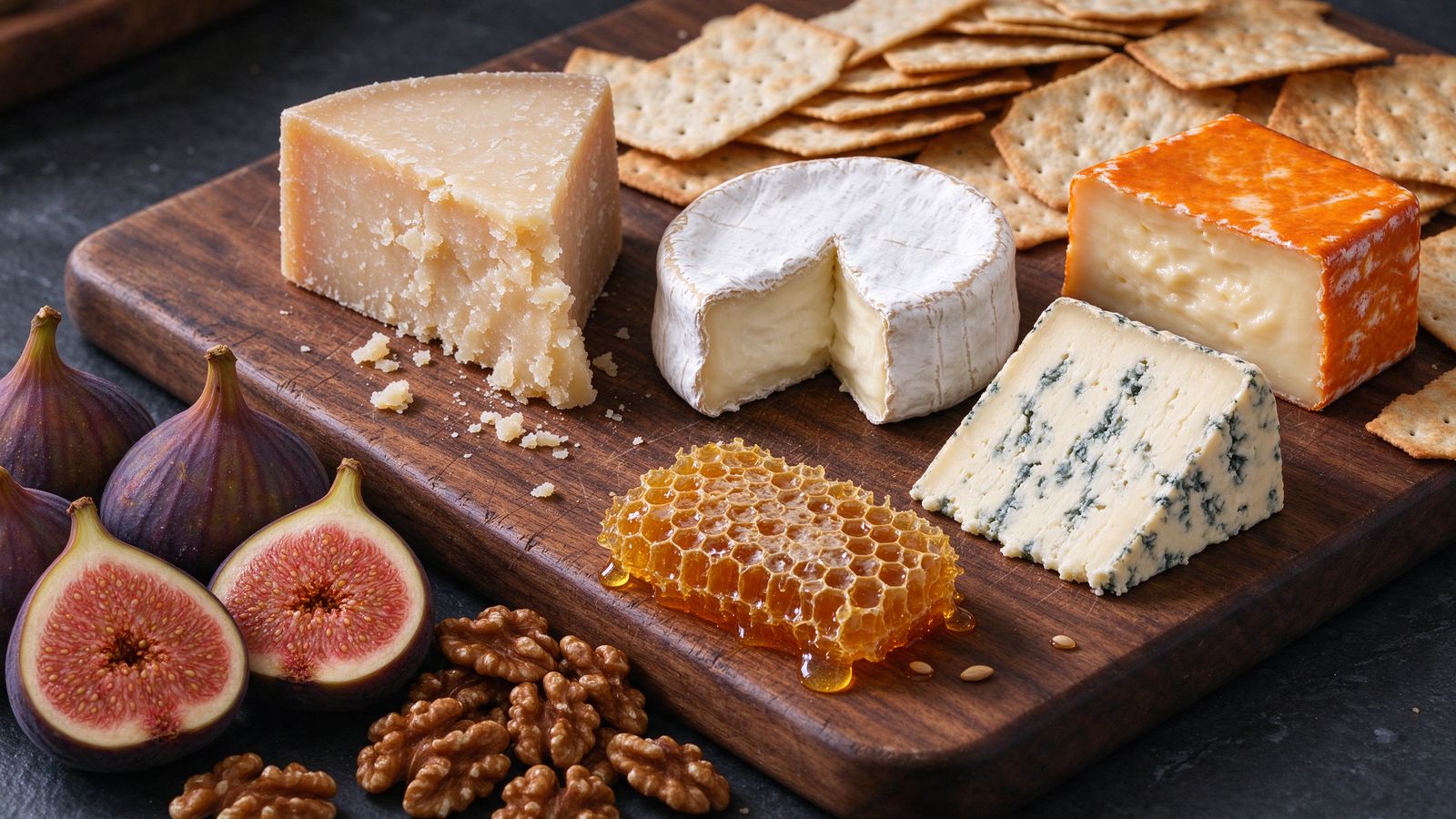
A board that works gives the eater choices that pull in different directions. Creamy against crumbly. Milky against nutty and aged. A salty blue against a spoon of honey. A sharp pickle to reset the palate before the next cheese. When people go back for a third round, it is usually because the board keeps surprising them.
So plan in this order: contrast first, quantity second, decoration last. If you are feeding a crowd, the party guide and calculator handles the amounts; this page handles the choices.
Choosing the Cheeses
How many
Three to five. Three is right for a small group or a nibble before dinner. Five is generous for a party. An odd number tends to look better on the board, and it forces you to pick rather than collect.
Which styles
Pick from different families in the six cheese styles. A reliable three-cheese board is one soft (fresh or soft-ripened), one firm (semi-hard or hard) and one bold (blue or washed-rind). For five, add a second firm cheese of a different age and a second soft one from a different milk.
Which milks
Cow, goat and sheep milk taste different even inside one style. Goat brings a bright, lemony tang. Sheep is rich, sweet and a little nutty. Cow covers the widest range from buttery to brothy. Including at least two milks is the easiest way to make a board feel considered.
Everything Else on the Board
Accompaniments are not filler. Each one has a job, and a balanced board covers all four of them.
- Sweet: honey, fruit pastes, fresh grapes or pears, dried apricots or figs. Sweetness softens salty blues and aged cheeses.
- Crunchy: nuts, crisp crackers, toasted bread. Texture contrast matters most next to soft cheese.
- Bright: cornichons, pickled onions, apple slices, grainy mustard. Acid cuts richness and wakes up a tired palate.
- Salty and savoury: olives and cured meats. Optional, but they turn a nibble into something closer to a meal.
Keep crackers and bread plain. Heavily seasoned crackers compete with the cheese; a neutral water cracker or a good baguette lets it speak. Put the bread to the side or in a separate basket so it does not go soft against moist cheese and fruit.
Interactive Cheese Board Builder
Tap cheeses and extras to place them on the board. The checklist shows whether your board covers the contrasts that make a spread work. Nothing here is a product recommendation; these are common cheese types you can find under many names.
Balance check (0 cheeses)
- Three to five cheeses
- At least three different styles
- At least two different milks
- One bold cheese (blue or washed-rind)
- Something sweet
- Something crunchy (nuts, crackers or bread)
- Something bright or salty to reset the palate
Arranging the Board in Five Moves
Arranging is where boards start to look generous instead of sparse. Work from the largest items to the smallest.
- 01
Place the cheeses first
Space them apart, ideally in a loose triangle or zigzag, so knives and hands are not crossing. Put the mildest where people will reach first.
- 02
Open each cheese
Cut a few pieces from each one and leave the rest whole. A sliced corner tells guests how to approach a wedge they have never seen.
- 03
Give wet things a dish
Honey, jam, olives and pickles go in small bowls so their liquid does not run into crackers or soft rinds.
- 04
Fill the gaps in clusters
Fruit, nuts and meat go next to the cheeses they suit: honey by the blue, apple by the Cheddar, grapes by the soft cheese. Clusters look deliberate.
- 05
Label and add knives
Small labels with the cheese name and milk help guests with allergies or preferences, and they start conversations. One knife per cheese.
Common Cheese Board Mistakes
The messy middle
The most common failure point is timing. Boards built straight from the fridge taste of very little for the first half hour, and boards left out all evening get sweaty and tired. Temper the cheese first, serve it in rounds if the party is long, and refresh the board rather than piling more onto it. Our storing and serving guide covers tempering times by style.
- Too many similar cheeses. Four mild yellow cheeses read as one cheese. Spread across styles and milks.
- Crowding. If the cheeses touch, flavours and rinds mingle. Use a bigger board or two boards.
- Seasoned crackers. Rosemary and garlic crackers drown delicate cheeses. Save them for dips.
- One knife for everything. Blue cheese ends up in the Brie. Give each its own.
- Forgetting non-cheese eaters. Fruit, nuts, bread and pickles mean nobody is left with an empty plate.
Once the board is set, decide what to drink. The cheese pairing guide matches each style with wine, beer, cider and alcohol-free options.
Common Questions
How many cheeses should go on a cheese board?
Three to five covers most tables. Three is enough for a small group or a pre-dinner nibble; five gives a party some range without turning the board into a blur. Past five, flavours start to run together and you end up with a fridge full of half-wedges.
How far ahead can I make a cheese board?
Cut and arrange firm cheeses an hour or two ahead, cover the board loosely and keep it cool. Add soft cheeses, cut fruit, crackers and honey closer to serving so nothing weeps, browns or goes soft. Follow current USDA guidance on how long perishable food should sit out.
Should I cut the cheese before guests arrive?
Cut a few slices or wedges from each cheese to show people how to approach it, then leave the rest whole with its own knife. Pre-cut cheese dries out faster, and whole pieces look more generous.
What is the best board to use?
Wood, marble, slate and even a large flat platter all work. Marble and slate stay cool, which helps on a warm day. Wood is forgiving and easy to cut on. Just make sure it is big enough that cheeses are not touching.
Do I need a special knife for each cheese?
A separate knife for each cheese stops a blue from streaking through your mild cheese. Soft cheeses like a thin or holed blade, hard cheeses like a short, sturdy one, and crumbly blues can be broken with a small fork or spade. Ordinary table knives will do if that is what you have.