How Cheese Gets Sorted Into Styles
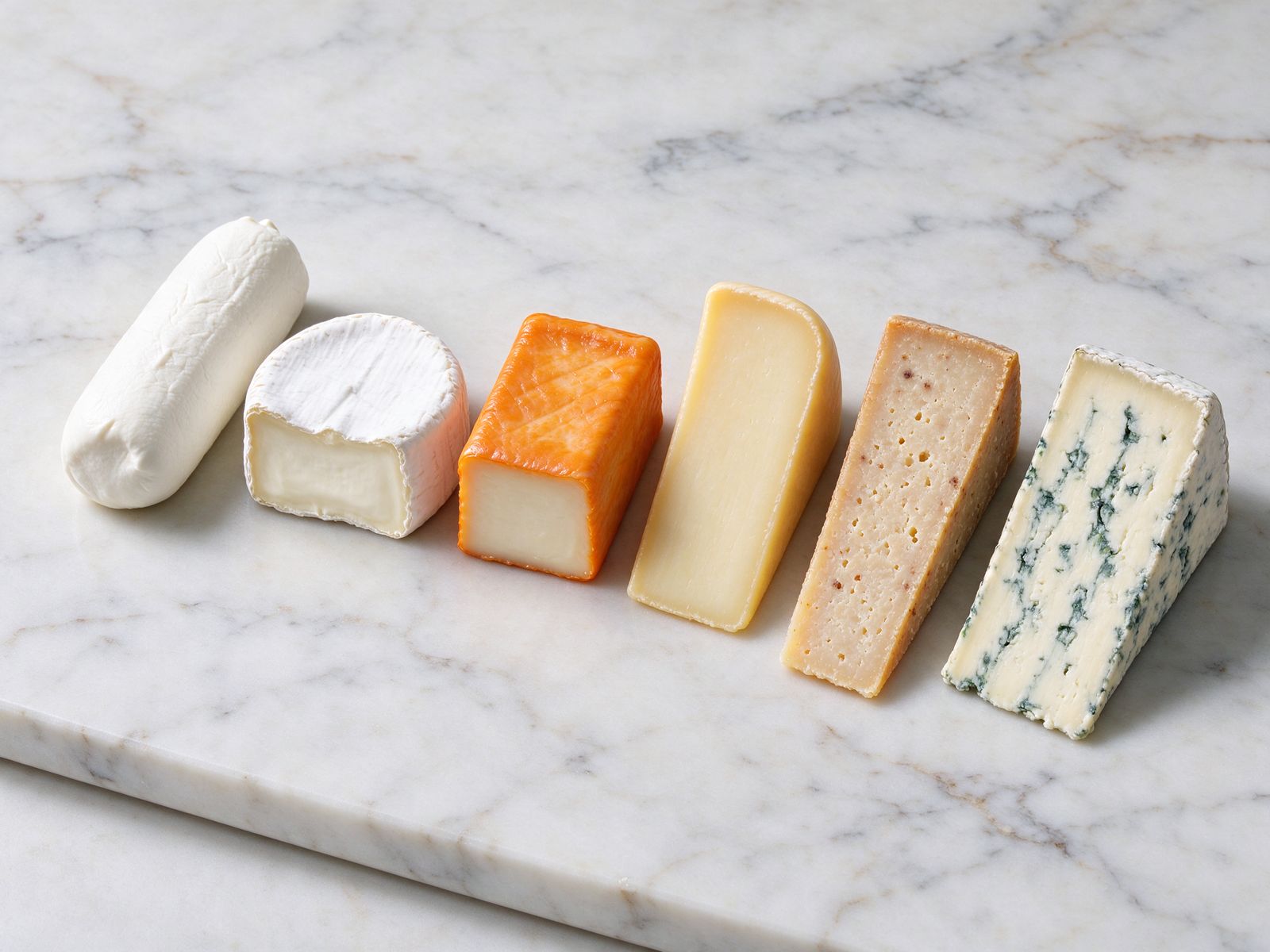
There is no single official system. Cheesemongers, cookbooks and competitions all slice the world a little differently: some by milk, some by country, some by texture. We use a six-way split by style because it predicts the things you care about at home. Will it spread or slice? Will it melt? How long will it keep? What should you pour with it?
Three variables do most of the work. Moisture drops as a cheese ages, so younger cheeses are softer and milder while older ones are firmer and more concentrated. The rind is where much of the ripening happens; a white mould coat, a sticky orange wash and a dry natural crust each push flavour in a different direction. And mould inside the cheese, in the case of blues, creates its own category.
Milk type (cow, goat, sheep, buffalo) runs across all six. A goat cheese can be fresh, bloomy or aged hard. So treat milk as a second layer: first ask what style you are looking at, then ask what animal it came from.
A quick test at the counter
Press the cut face gently with a fingertip through the wrap. If it dents and stays dented, think soft or semi-hard. If it barely gives, you are in hard territory. Then look at the rind: white and fuzzy, orange and tacky, waxed, or dry and crusty.
Fresh Cheese
Fresh cheese is cheese that has not been aged. Milk is curdled, drained and sold within days. No rind forms, the moisture stays high and the flavour stays close to the milk: clean, lactic and a little tangy. Ricotta, fresh goat cheese, cream cheese, cottage cheese, mozzarella, burrata and queso fresco all live here. Brined cheeses like feta are close neighbours; the brine adds salt and firmness but they still have no rind.
Because fresh cheese is so moist, it is also the most perishable. Keep it cold, keep it covered, and eat it soon after opening. On a board, fresh goat cheese drizzled with honey or olive oil is the easy, crowd-friendly opener. In the kitchen, ricotta and fresh mozzarella melt softly but do not brown much, which is why pizza makers often blend them with a firmer cheese.
What to look for
Bright white colour, a clean milky smell, and no sour or yeasty notes. A sell-by date matters more here than with any other style.
Soft-Ripened Cheese
Soft-ripened (also called bloomy-rind) cheeses are sprayed or dipped with a white mould culture that grows into a velvety coat. That rind slowly breaks down the paste from the outside in. Cut a young Brie-style round and you will see a chalky centre surrounded by a softer, translucent ring under the rind, the cream line. As the cheese ripens, that ring moves inward until the whole thing slumps when cut.
Brie, Camembert, double and triple crèmes, and many small goat cheeses with white or ash-covered rinds belong here. The flavour runs from buttery and mushroomy to deeply savoury. An over-ripe bloomy cheese smells of ammonia and the rind turns sticky or brown; a little ammonia at the rind can air off, but a strong blast through the whole cheese means it is past its best.
Young bloomy cheese tastes of butter and mushrooms. Old bloomy cheese tastes of cabbage. Buy for the day you plan to serve it.
Washed-Rind Cheese
Washed-rind cheeses are rubbed or bathed in brine, beer, wine, cider or spirits while they age. The moist, salty surface invites bacteria that turn the rind orange to russet and produce the famous smell, often described as barnyard, socks or cured meat. Taleggio, Époisses, Limburger, Munster from Alsace and Reblochon are classic examples, and many modern farmstead cheeses use the technique.
Here is the thing most people miss: the paste is usually gentler than the aroma. Taste a piece from the centre first, then one with rind. Washed rinds are generally edible, though some are gritty. These cheeses love bubbly drinks; a Belgian-style beer or dry cider handles the funk better than most red wines.
Semi-Hard Cheese
Semi-hard (sometimes called semi-soft or semi-firm) cheeses have had their curds pressed to push out whey and are aged for weeks to a few months. They are supple, sliceable and usually mild to medium in flavour. Young Gouda, Havarti, Edam, Monterey Jack, many Alpine-style tommes and younger Manchego-style sheep cheeses fit here.
This is the workhorse family. These cheeses melt evenly, slice cleanly for sandwiches and please cautious eaters on a board. They also show off milk differences well, which makes them a good place to compare a cow, goat and sheep cheese side by side.
Hard Cheese
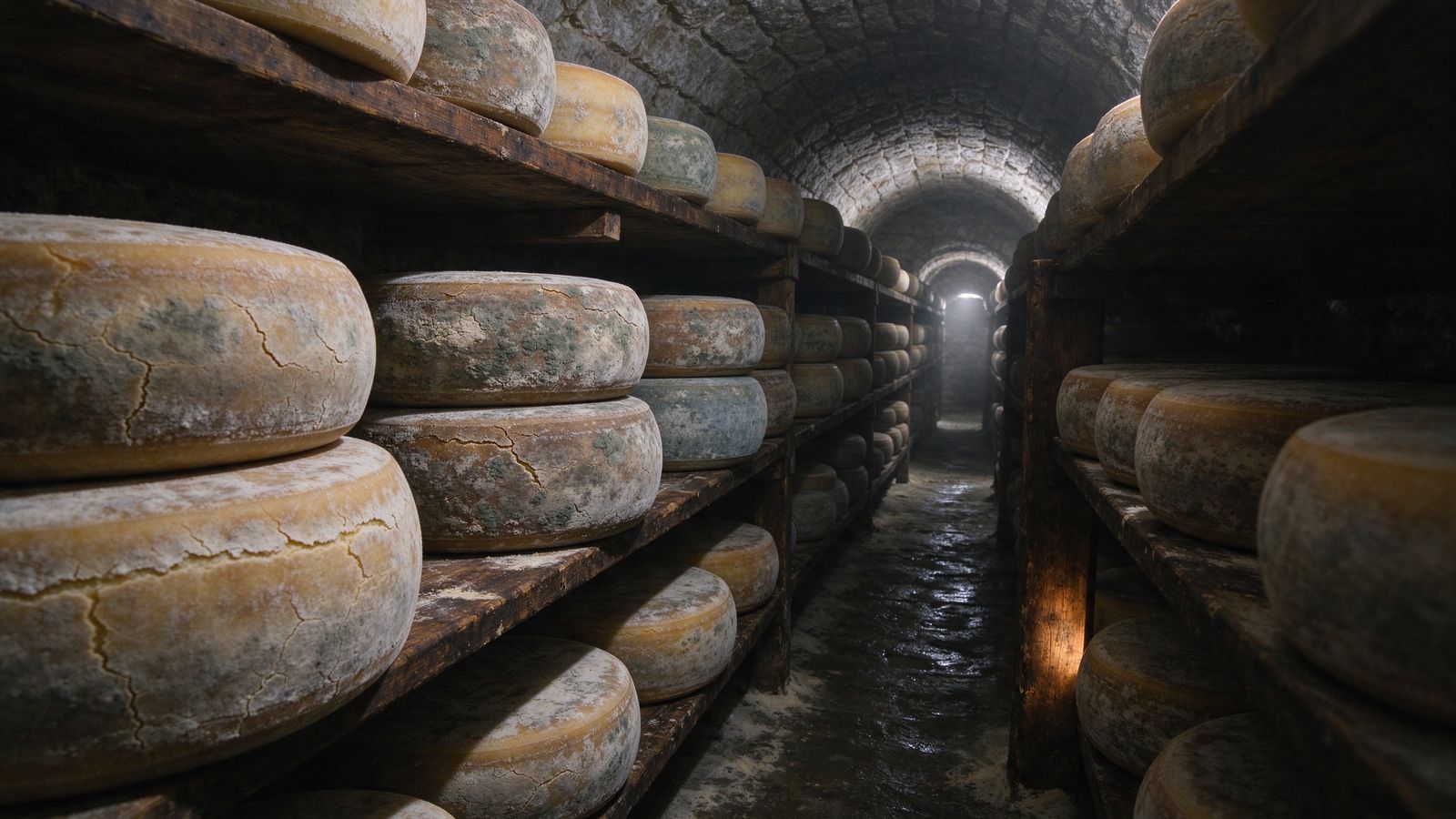
Hard cheeses are pressed and aged long enough, often many months and sometimes years, for most of the moisture to leave. The paste turns dense, flaky or granular, and flavour concentrates into nutty, brothy, caramel and savoury notes. Aged Cheddar, Comté and Gruyère styles, aged Gouda, Pecorino, aged Manchego and the Parmigiano and Grana family are the classics.
Low moisture means hard cheese keeps longer than any other style and travels well to a picnic. It also grates beautifully. Some very old wheels lose their ability to melt smoothly and turn oily or grainy in a hot pan, so for sauces, mix them with a younger semi-hard cheese. Our melting cheese guide compares the options.
Blue Cheese
Blue cheese gets its veins from mould cultures added to the milk or curd. After the cheese is formed, it is pierced with needles to let air inside, and the mould grows along those channels. Roquefort (sheep), Gorgonzola and Stilton (cow) and Cabrales are well-known examples, and the style ranges from soft and creamy to firm and crumbly.
Flavour runs from gentle and sweet to sharp, salty and peppery. Blue is the cheese most likely to divide a table, so on a board, offer one and pair it with something sweet: honey, dried figs, pears or a dessert wine. Crumbled into salads or melted into a sauce, a little blue goes a long way.
Style Finder: Name the Cheese in Front of You
Answer three questions about a cheese you are holding (or remembering) and we will tell you which family it most likely belongs to.
The Six Styles Side by Side
Use this as a cheat sheet when you are shopping or planning a board. Flavour ranges are typical, not rules; a mild blue and a punchy semi-hard both exist.
| Style | Texture | Rind | Typical flavour | Familiar examples | Keeps |
|---|---|---|---|---|---|
| Fresh | Spoonable to springy | None | Milky, tangy, clean | Ricotta, chèvre, mozzarella, feta | Days |
| Soft-ripened | Creamy, oozing when ripe | White bloom | Butter, mushroom | Brie, Camembert, triple crème | About a week once cut |
| Washed-rind | Soft to semi-soft | Orange, tacky | Savoury, meaty, pungent rind | Taleggio, Époisses, Limburger | About a week once cut |
| Semi-hard | Supple, sliceable | Natural or waxed | Mild, buttery, lightly nutty | Young Gouda, Havarti, Jack | A couple of weeks |
| Hard | Dense, flaky, grainy | Natural, clothbound or waxed | Nutty, brothy, caramel | Aged Cheddar, Comté, Parmigiano | Several weeks |
| Blue | Creamy to crumbly | Natural or foil-wrapped | Salty, sharp, peppery | Roquefort, Gorgonzola, Stilton | A few weeks |
Keeping times assume good wrapping and a cold fridge; the storing and serving guide covers how to stretch them. Ready to put styles together? The cheese board guide shows how to mix them, and the pairing guide matches each style with drinks.
Common Questions
Can you eat the rind on cheese?
Bloomy rinds on Brie-style cheeses and most washed rinds are edible, and plenty of people love them. Wax, cloth and plastic coatings are not food. Hard natural rinds on long-aged wheels are safe but often too tough to enjoy, so many cooks save them to simmer in soups and sauces.
Is the mould in blue cheese safe to eat?
Blue cheese is made with specific mould cultures added on purpose during cheesemaking. That is different from fuzzy, unexpected mould growing on cheese in your fridge. For what to do with surprise mould, see our storing guide and current USDA food safety guidance.
Is feta a fresh cheese?
Feta is a brined cheese. It is not aged on a shelf the way a hard cheese is, but it does sit in salty brine, which makes it firmer, saltier and longer-lasting than a true fresh cheese like ricotta. Most guides group it with the fresh family because it has no rind and a bright, milky tang.
What are the crunchy bits in aged cheese?
Small white crystals in aged Gouda, Parmigiano-style and old Cheddar are usually amino acid (tyrosine) or calcium lactate crystals that form as cheese ages. They are harmless and many people treat them as a sign of a well-aged wheel.
Why does a washed-rind cheese smell so strong?
The rind is washed with brine, beer, wine or spirits, which encourages bacteria that give the surface its orange colour and its pungent smell. The paste inside is often surprisingly mild and buttery, so taste before you judge.