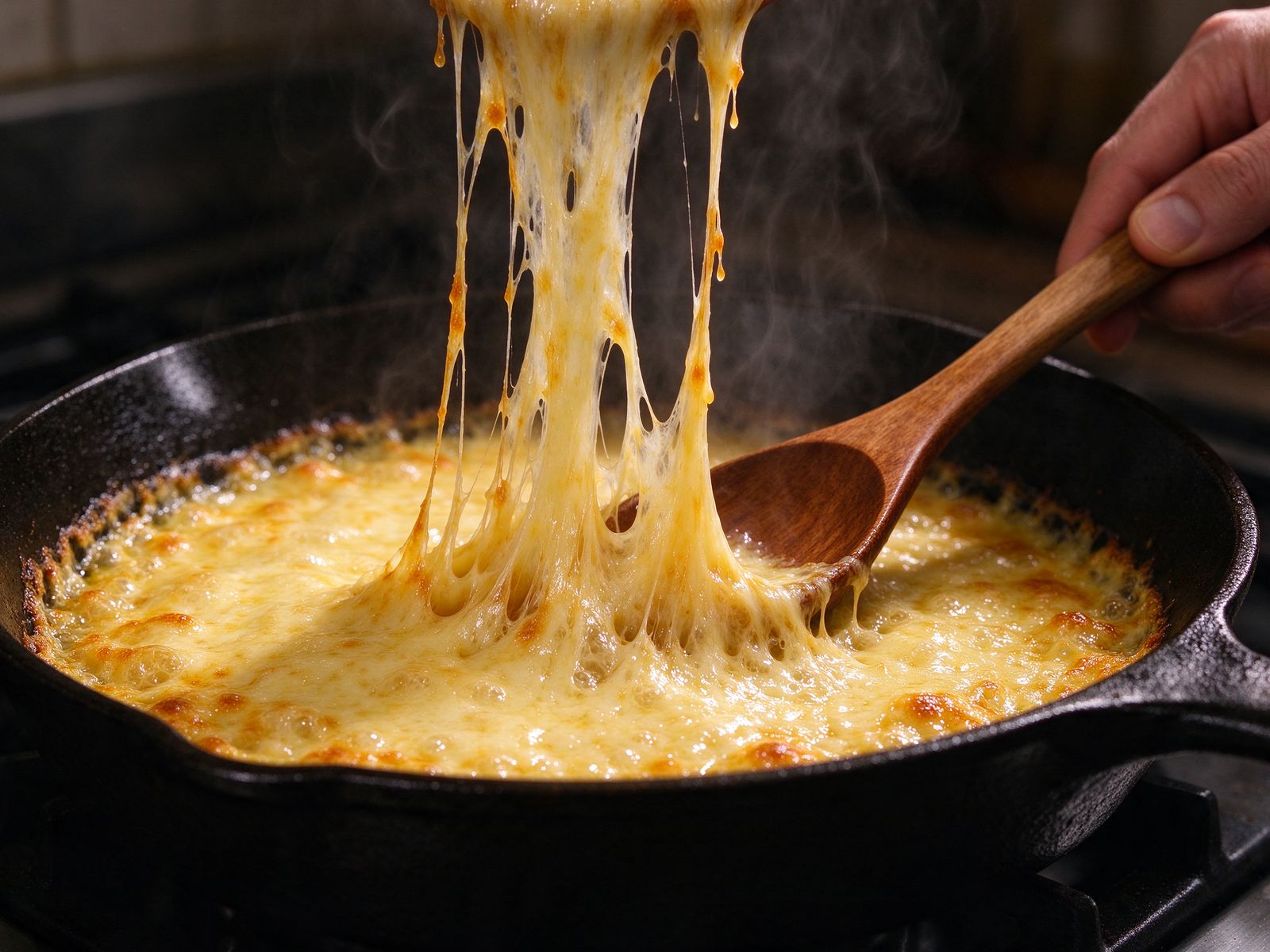
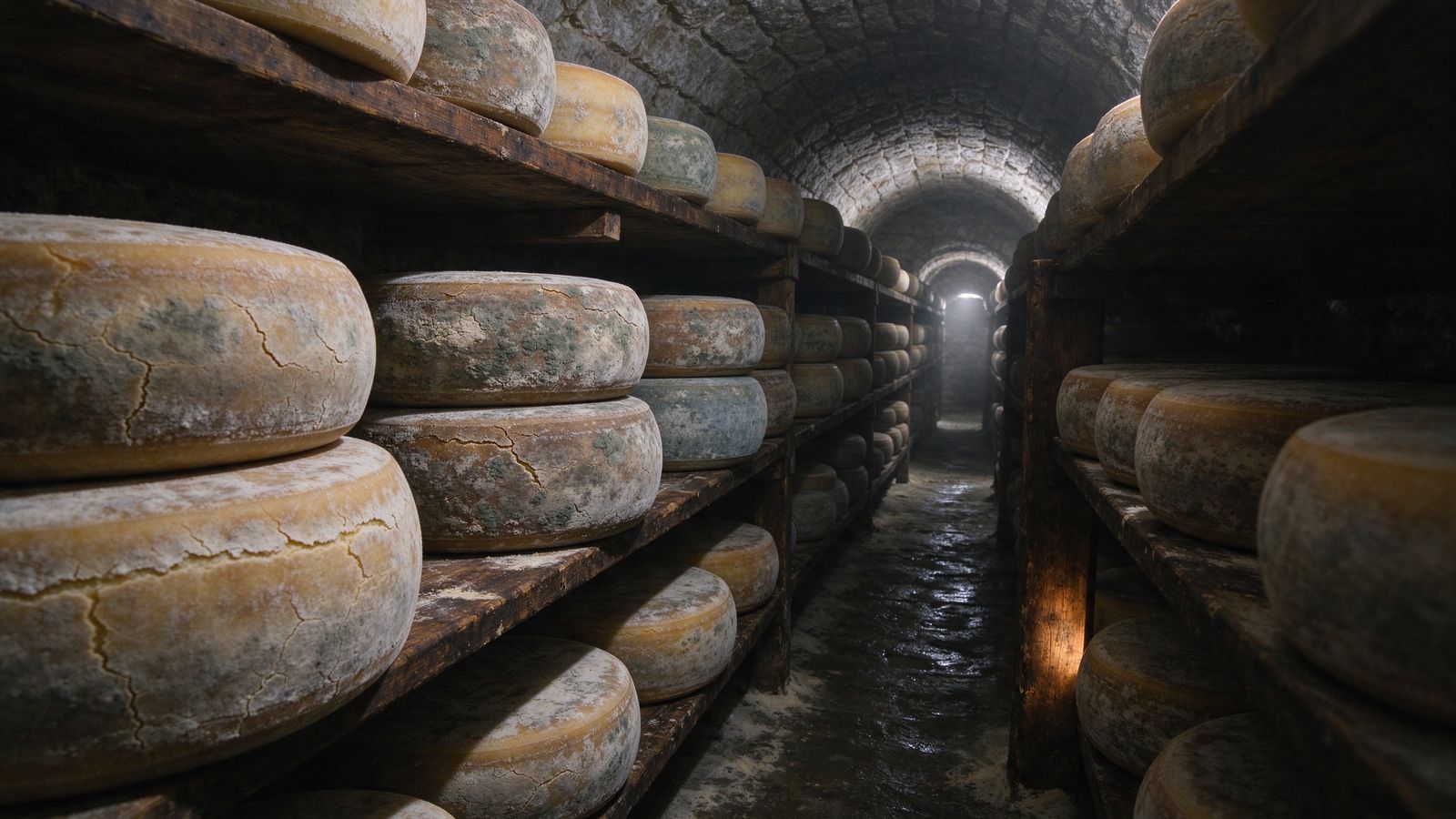
Some cheeses stretch into long strings, some flow into a silky pool, some brown into a crisp lid, and some refuse to melt at all. Knowing which is which is the difference between a glossy sauce and a greasy, grainy one.
Why Some Cheeses Melt and Others Do Not
Cheese is mostly a mesh of milk proteins (casein) holding fat and water. When you heat it, the fat softens first, then the protein mesh loosens and the cheese starts to flow. How well that happens depends on a few things the cheesemaker already decided long before the cheese reached your pan.
Four factors
What Decides How a Cheese Melts
Moisture, age, acidity and how the curd was set. Read these four and you can predict a cheese's behaviour in the pan before you buy it.
Moisture
Wetter cheeses melt more easily. That is why young cheeses flow and long-aged ones tend to stay put or turn oily.
Age
As cheese ages, its proteins break into smaller pieces. Very old cheese melts but separates, so it is best grated over the top for flavour and browning.
Acidity
There is a sweet spot. Cheeses in a middle acidity range, like mozzarella, stretch beautifully. Too much or too little acid and the mesh either crumbles or stays rigid.
How it was set
Cheeses curdled with acid and heat, like paneer and queso blanco, form a mesh that does not loosen with heat, so they soften without melting.
Melt Chart: Stretch, Flow and Browning
Scores from 1 to 5 are a rough guide to typical behaviour, not lab measurements; individual cheeses vary by maker and age. Filter by what you are cooking.
CheeseStretchFlowBrowning
Low-moisture mozzarella
Fresh mozzarella
Young Cheddar
Aged Cheddar
Monterey Jack
Oaxaca
Fontina (Italian style)
Gruyère / Alpine
Emmentaler / Swiss
Young Gouda
Raclette-style
Parmigiano-style
Halloumi
Paneer / queso blanco
Choosing Cheese by Dish
Pizza
Low-moisture mozzarella is the standard for a reason: it stretches, melts evenly and browns in spots without pooling water. Fresh mozzarella gives creamy islands but releases liquid, so tear it, pat it dry and add it to a very hot oven. A little Parmigiano-style cheese on top adds savoury depth.
Grilled cheese
Combine a cheese that flows with one that tastes of something. Young Cheddar, Monterey Jack, Fontina or young Gouda for the melt; a little aged Cheddar or an Alpine-style cheese for flavour. Grate rather than slice, and cook over moderate heat so the inside melts before the bread burns.
Mac and cheese and cheese sauces
Start with a roux-thickened milk sauce or add a pinch of sodium citrate, then stir in grated cheese off the boil. Younger cheeses keep it smooth; a handful of something aged adds punch.
Fondue
Alpine cheeses such as Gruyère and Emmentaler, melted gently with dry white wine and a little cornstarch, are the classic. The wine's acid and the starch both help keep the cheese from clumping.
Gratins and baked dishes
Alpine cheeses melt well and brown handsomely. Finish with a dusting of a hard grating cheese for a crisp, golden top.
Quesadillas
Oaxaca cheese pulls into strings like mozzarella; Monterey Jack melts smoothly and mildly. Both work, alone or together.
Stretch and browning in one pan: a young, high-moisture cheese under a hot finish. Illustrative photo.
Melting Technique That Prevents Grease and Grit
Grate it. Smaller pieces melt faster and more evenly, before the fat has time to separate.
Warm it first. Let grated cheese sit out briefly so it is not fridge-cold when it hits the heat.
Keep the heat moderate. Boiling or scorching a cheese sauce squeezes out the fat. Add cheese off the boil and stir.
Add it gradually. A handful at a time, letting each melt before the next.
Use a stabiliser. A little starch, a splash of wine, or sodium citrate helps the cheese stay emulsified.
Grate your own for sauces. Pre-shredded cheese carries anti-caking agents that can dull a smooth sauce.
If a sauce splits
Take it off the heat, add a splash of warm milk or a squeeze of lemon, and whisk hard. A small spoon of cornstarch slurry or a pinch of sodium citrate often brings it back. If it is still grainy, blend it; it will taste fine even if it is not glossy.
Cheeses That Hold Their Shape
Halloumi, paneer, queso blanco and queso para freír are made in a way that keeps their structure under heat. Instead of melting, they soften inside and turn golden outside, which makes them excellent seared in a dry pan, grilled on skewers or cubed into curries. Feta and fresh goat cheese sit in between: they soften and brown a little, and they are lovely baked, but they will not give you strings.
For more on how these families differ, see the cheese styles guide. Got leftovers from a party? The party guide has ideas, and the storing guide covers freezing cheese for cooking.
Common Questions
Why does my cheese sauce turn grainy or oily?
Usually the heat was too high or the cheese was very aged. High heat squeezes fat out of the protein network, and long-aged cheeses have proteins that are already broken down. Use lower heat, add the cheese gradually off the boil, start with a younger cheese and include a little starch or an emulsifying salt such as sodium citrate.
What is the best cheese for grilled cheese?
A mix works best: something that flows, such as a young Cheddar, Monterey Jack, Fontina or young Gouda, plus a little of something with more flavour, such as aged Cheddar or an Alpine-style cheese. Grate it, use moderate heat and give it time.
Which cheeses do not melt?
Halloumi, paneer, queso blanco and queso para freír soften but keep their shape, which is why they can be grilled or seared. Fresh goat cheese and feta soften and brown slightly rather than flowing. That is a feature when you want a crisp, golden crust.
Should I use pre-shredded cheese for melting?
Pre-shredded cheese usually contains anti-caking agents such as starch or cellulose, which can make sauces a little gritty or slow to melt smoothly. For a pizza or casserole it is fine. For a silky sauce or fondue, grate it yourself from a block.
What cheese is used in fondue?
Classic Swiss-style fondue uses Alpine cheeses such as Gruyère and Emmentaler, sometimes with others, melted with dry white wine and a little starch. The acid in the wine and the starch both help keep the cheese smooth.