The Four Forces Behind Every Good Pairing
Pairing guides love long lists of "this cheese with that bottle." Lists help, but they break the moment your cheese is not on them. The forces below explain why the lists work, so you can improvise.
Good pairings are not magic. They come down to a handful of forces: weight, acidity, bubbles, salt and sweetness. Learn those and you can pair any cheese with whatever is already in your fridge.
Pairing guides love long lists of "this cheese with that bottle." Lists help, but they break the moment your cheese is not on them. The forces below explain why the lists work, so you can improvise.
Weight.
Match light with light and rich with rich. A delicate fresh cheese disappears under a heavy red; a rich aged wheel makes a thin white taste watery.
Acid.
Acidity cuts through fat and refreshes. It is why crisp whites, cider and tart juices suit creamy cheese so well.
Bubbles.
Carbonation physically scrubs your palate between bites. Sparkling drinks are the most forgiving choice for a mixed board.
Salt.
Salt loves sweetness and fights tannin. Salty blues want something sweet; heavy tannins taste bitter against salty, creamy cheese.
A fifth idea sits on top: what grows together goes together. Cheeses and drinks from the same region often evolved side by side, so a regional match is a good first guess. Loire goat cheese and Loire Sauvignon Blanc, Normandy Camembert and Normandy cider, Spanish Manchego and Spanish red.
Wine is the pairing most people reach for, and also the one most likely to disappoint, mainly because of tannin. The drying grip of a big young red can turn harsh and metallic next to soft, creamy or salty cheese. That does not mean red wine and cheese do not mix. It means you should match tannic reds with firm, aged cheeses that have the fat and savouriness to stand up to them.
Pro tip
Taste the wine, then the cheese, then the wine again. The second sip tells you everything. If the wine suddenly tastes thin or bitter, the pairing is fighting; if it tastes rounder and fruitier, you have a match.
Many cheesemongers will tell you beer is easier to pair with cheese than wine, and there is a good case for it. Beer has carbonation to scrub the palate, malt sweetness to balance salt, roast flavours that echo aged cheese, and very little of the tannin that trips up red wine. Both are also farm products built on fermentation, which gives them a shared vocabulary of bready, nutty and earthy notes.
Start by matching intensity. Wheat beers and pilsners for fresh and mild cheeses. Saisons and Belgian ales for bloomy and washed rinds. Pale ales and IPAs for sharp Cheddar, where the hops and the bite meet head-on. Brown ales for nutty Alpine and Gouda styles. Stouts and porters for blue. If you are not sure, pick a malty amber or brown ale; it rarely clashes.
Cider might be the most underrated cheese drink. It brings the acidity of white wine and the fruit of a chutney, with bubbles as a bonus. Apples and cheese are already an old partnership on the board, so cider simply moves that pairing into the glass.
Dry ciders suit fresh, bloomy and Cheddar-style cheeses. Off-dry and medium ciders are easy with mild semi-hard cheeses. Farmhouse ciders with some funk can meet washed rinds on their own terms. And sweet or ice ciders can stand in for dessert wine alongside blue.
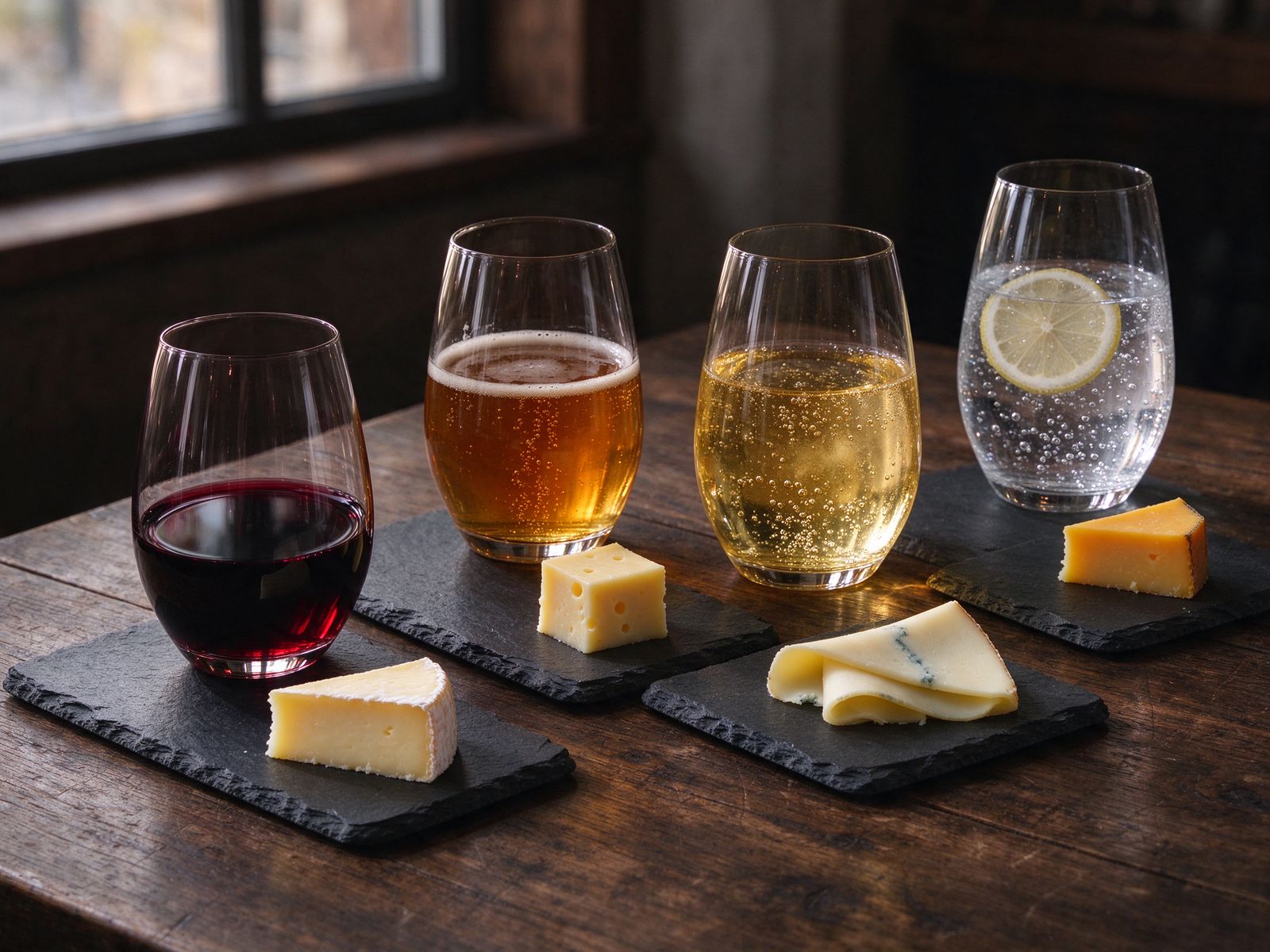
Nobody at the table should be left with plain water by default. Look for drinks that do the same jobs as wine and beer: acidity, bubbles, tannin or sweetness.
| Drink | What it does | Best with |
|---|---|---|
| Sparkling water with citrus | Bubbles and acid, no sweetness | Any board, especially fresh and soft cheeses |
| Unsweetened black tea | Tannin and a little bitterness | Hard, aged cheeses |
| Kombucha | Acid, light funk, bubbles | Washed-rind and goat cheeses |
| Tart cherry or pomegranate juice | Sweet-tart fruit | Blue cheese |
| Sparkling apple or pear juice | Fruit and bubbles | Bloomy and semi-hard cheeses |
| Alcohol-free beer or cider | Same flavours, minus the alcohol | Follow the beer and cider notes above |
Choose a cheese style to see a starting point in each glass. Not sure of the style? The style finder helps.
Crisp, high-acid whites like Sauvignon Blanc or a dry rosé. The classic match is a Loire Sauvignon Blanc with young goat cheese.
Wheat beers and light pilsners keep it fresh and lemony.
A dry, light cider brings apple and acid without weight.
Sparkling water with lemon, or a tart lemonade, mirrors the tang.
Sparkling wine is the easy win; bubbles lift the cream. Light reds like Pinot Noir or Gamay also suit Brie-style cheeses.
Belgian-style saisons and farmhouse ales echo the earthy rind.
Normandy has paired cider with its Camembert for generations. Try a dry or off-dry cider.
Non-alcoholic sparkling apple juice or a dry sparkling tea.
Aromatic whites with a touch of sweetness, such as off-dry Riesling or Gewürztraminer, calm the funk.
Belgian ales, saisons and abbey-style beers are a natural fit for pungent rinds.
Funky, farmhouse-style ciders meet the rind halfway.
Kombucha, or ginger beer for something with a little bite.
Easygoing: Chardonnay, Pinot Noir, Beaujolais or a medium-bodied Tempranillo with sheep cheeses.
Brown ales, amber lagers and malty beers flatter young Gouda-style cheeses.
Medium-dry cider with a little sweetness works with mild, buttery cheeses.
Pear or apple juice cut with sparkling water, or a light iced tea.
This is where bigger reds work: Cabernet, Syrah, Rioja with aged Manchego-style, Lambrusco with Parmigiano-style. Aged white Burgundy and dry sherry also shine.
Pale ales and IPAs stand up to aged Cheddar; nutty brown ales suit Alpine wheels.
Dry, tannic English-style ciders are a long-standing partner for Cheddar.
Strong black tea, unsweetened, or a dry non-alcoholic red blend.
Sweet wines: Sauternes with Roquefort-style, Port with Stilton-style. Salt meets sugar.
Stouts, porters and barley wines bring roast and sweetness to match the bite.
Ice cider or a sweet, rich cider plays the dessert-wine role.
Tart cherry or pomegranate juice, or a drizzle of honey and strong tea.
The fastest way to learn is a side-by-side tasting. Choose three cheeses from different styles and two drinks that contrast, such as a sparkling wine and a brown ale. Pour small amounts, taste each cheese alone, then with each drink, and jot down a word or two. Within twenty minutes you will know more about your own palate than any chart can tell you.
Building the board for it? Use the cheese board builder. Serving a crowd? The party guide covers amounts. And if a pairing involves cooking, such as fondue with white wine, see melting cheeses.
Drink responsibly
Alcohol suggestions on this page are for adults of legal drinking age. Every pairing above has an alcohol-free alternative in the explorer.
White wine is the safer bet more often than people expect. Its acidity cuts through fat and it rarely clashes with soft or salty cheeses. Big, tannic reds can taste harsh and metallic next to creamy cheese, though they often work with firm, aged wheels.
Something with bubbles. Sparkling wine, a crisp beer, dry cider and sparkling water all scrub fat from the palate and get along with most styles, which makes them forgiving when the board ranges from fresh goat cheese to blue.
Look for the same jobs wine does: acidity, bubbles or tannin. Sparkling water with citrus, tart fruit juices, unsweetened iced or hot black tea, kombucha and alcohol-free beers and ciders all work. Sweet juices pair well with blue cheese the way dessert wine does.
Salt and sweetness balance each other. A sweet wine softens the sharp, salty edge of blue cheese, and the cheese keeps the wine from tasting cloying. The same logic explains honey and figs with blue.
No. Pick one or two drinks that suit the board as a whole, usually something sparkling plus one still wine or beer. Taste each cheese with each drink and notice which combinations you like; there is no wrong answer at your own table.
Ask Steve's Cheese
Tell us what you are drinking and who you are serving. Pairing puzzles like that help shape future guides.